2015 August Hot Audit News
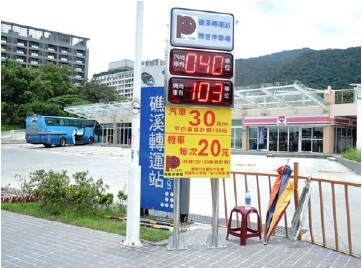
To provide shuttle buses for tourists from Jiaoxi to downtown or other tourist attractions and to enhance the quality of public transport services, Yilan County Government continuously compiled NT$71.54 million budget to build Jiaoxi Transit Center from 2012 to 2014. The transit center was finished on 17 October 2014 and opened in the next month. However, Yilan Audit Office found out that the government did not charge fees so that the parking lots were occupied illegally. The entrance was jammed by arbitrary parking and the planned mall was vacant. Besides, the route inside the center was marked unclearly and the transferring and traveling information was lacked, affecting the convenience of the transport and service functions of the transit center. After the notification of Yilan Audit Office, Yilan County Government outsourced the administration of Jiaoxi Transit Center for five years on 16 March 2015, receiving NT$19.56 million of option money. Besides setting up a service center with a lactation room, improving the route signals and providing a variety of traveling information, it also subsumed all the parking lots into control. Furthermore, the transit center introduced convenient stores, vehicles rental stations, free Wi-Fi, ATMs, and public telephones, which provided a perfect transferring space for passengers.
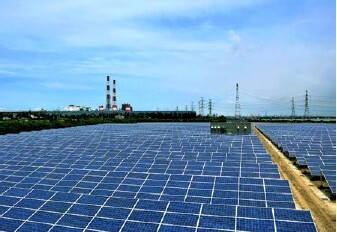
Providing electricity to whole country is Taiwan Power Company’s duty. The company coordinates with a promotion of the renewable energy policy, paying certain amount to public funds in accordance with Article 7th of Renewable Energy Development Act. This expense could be affiliated to charging electricity fees after reported to administrative agencies. However, National Auditing Office found out that the regulation in accordance with the Article was not verified by the competent authorities, so Taiwan Power Company had to afford all the cost rather than to charge from consumers. This large expenditure affected renewable energy developments and sustainable operations enormously. After the notification of the NAO, related competent authorities synthetically considered both renewable energy developments and sustainable operations, thereby making Ministry of Economic Affairs verify that the NT$1.715 billion public funds paid by Taiwan Power Company in 2014 could reflect the expenditures in electricity pricing according to “the formula for calculating electricity pricing”. All of the efforts above were for the sake of the development of renewable energy, the implementation of regulation and the spirit of user charge.
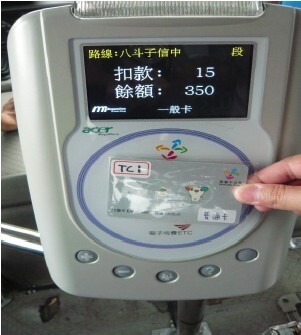
Keelung City Bus Management Office and EasyCard Corporation signed the contract of the card-based integrated ticketing system on January 1st 2011 which had a maturity date of December 31, 2014. It provided the service of Debit EasyCard when people took buses in Keelung City, and the management office paid the amount of money that was equivalent to 3% of the corporation’s revenue to it as service fee. Besides, the contract regulated that the rate could be reviewed and adjusted in every October. However, in September 2014, Keelung City Audit Office found out that the management office had never reviewed and adjusted the service fee rate. After the notification of the audit office, Keelung City Bus Management Office and EasyCard Corporation negotiated the service fee rate and resigned the contract of “EasyCard ticketing system” which adjusted the service fee from 3% to 2% revenue. According to the corporation’s revenue in 2014, it can save about NT$1.21 million expenses annually since 2015.
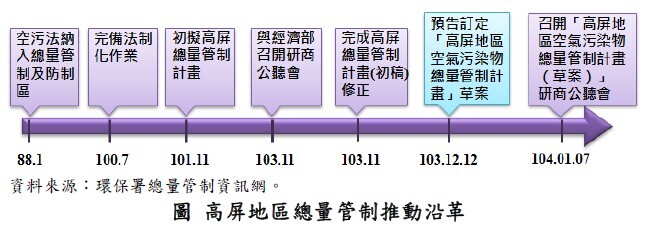
Kaohsiung-Pingtung area is heavy industrial district and it is affected by topographical and meteorological conditions interactively, causing the first rank of average particulate matter concentration and ozone in Taiwan. According to Article 8 of Air Pollution Control Act, Environmental Protection Administration operated a “Promotion of Total Emission Regulation in Kaohsiung-Pingtung Area” program in May 2010, and declared the standard of existing admitted emission amount and related regulations between June and July 2011. In 2012, the administration consulted with related authorities, but it failed to promote the program. Ministry of Economic Affairs and industrial circles concerned whether these regulations would bring negative impacts for long-term developments of economy and industries. After the notification by National Audit Office, Executive Yuan reconciled different opinions between Ministry of Economic Affairs and Environment Protection Administration. Therefore, the administration establishes “Task Forces and Coordination Groups on Reducing Air Pollution” that includes a “Group to Reduce Air Pollution” for integrating local resources. Besides, it has planned to establish a “Balance Management Platform on Reducing Air Pollution”, which contains operating systems such as “Application for Recognition of Existing Permanent Emissions” and “Emission Searching System”. So far, 155 factories registered in the systems and operated its function. It is expected to decrease at least 5% of sum emission in 3 years.
Providing electricity to whole country is Taiwan Power Company’s duty. The company coordinates with a promotion of the renewable energy policy, paying certain amount to public funds in accordance with Article 7th of Renewable Energy Development Act. This expense could be affiliated to charging electricity fees after reported to administrative agencies. However, National Auditing Office found out that the regulation in accordance with the Article was not verified by the competent authorities, so Taiwan Power Company had to afford all the cost rather than to charge from consumers. This large expenditure affected renewable energy developments and sustainable operations enormously. After the notification of the NAO, related competent authorities synthetically considered both renewable energy developments and sustainable operations, thereby making Ministry of Economic Affairs verify that the NT$1.715 billion public funds paid by Taiwan Power Company in 2014 could reflect the expenditures in electricity pricing according to “the formula for calculating electricity pricing”. All of the efforts above were for the sake of the development of renewable energy, the implementation of regulation and the spirit of user charge.
Keelung City Bus Management Office and EasyCard Corporation signed the contract of the card-based integrated ticketing system on January 1st 2011 which had a maturity date of December 31, 2014. It provided the service of Debit EasyCard when people took buses in Keelung City, and the management office paid the amount of money that was equivalent to 3% of the corporation’s revenue to it as service fee. Besides, the contract regulated that the rate could be reviewed and adjusted in every October. However, in September 2014, Keelung City Audit Office found out that the management office had never reviewed and adjusted the service fee rate. After the notification of the audit office, Keelung City Bus Management Office and EasyCard Corporation negotiated the service fee rate and resigned the contract of “EasyCard ticketing system” which adjusted the service fee from 3% to 2% revenue. According to the corporation’s revenue in 2014, it can save about NT$1.21 million expenses annually since 2015.
Kaohsiung-Pingtung area is heavy industrial district and it is affected by topographical and meteorological conditions interactively, causing the first rank of average particulate matter concentration and ozone in Taiwan. According to Article 8 of Air Pollution Control Act, Environmental Protection Administration operated a “Promotion of Total Emission Regulation in Kaohsiung-Pingtung Area” program in May 2010, and declared the standard of existing admitted emission amount and related regulations between June and July 2011. In 2012, the administration consulted with related authorities, but it failed to promote the program. Ministry of Economic Affairs and industrial circles concerned whether these regulations would bring negative impacts for long-term developments of economy and industries. After the notification by National Audit Office, Executive Yuan reconciled different opinions between Ministry of Economic Affairs and Environment Protection Administration. Therefore, the administration establishes “Task Forces and Coordination Groups on Reducing Air Pollution” that includes a “Group to Reduce Air Pollution” for integrating local resources. Besides, it has planned to establish a “Balance Management Platform on Reducing Air Pollution”, which contains operating systems such as “Application for Recognition of Existing Permanent Emissions” and “Emission Searching System”. So far, 155 factories registered in the systems and operated its function. It is expected to decrease at least 5% of sum emission in 3 years.