2015 March Hot Audit News

In order to foster the high-intermediate technicians for industry development, the Ministry of Education had recognized specialized schools into Institutes of Technology or Universities of Technology. However, these schools were limited to original sizes, and their implementing teaching as well as practice facilities had a gap in enterprise requirements, causing the schools which were inclined to increase low-cost departments such as the food and beverage department or department of tourism, and decrease high-cost departments such as electrical engineering or mechanical engineering. Moreover, The Ministry did not follow Paragraph 1, Article 3 of the “Standards of Total Development Scales and Resource Conditions at Institutions of Higher Education”, depending on overall national personal training policies and social development requirements, to measure the future supplies and demands of industries carefully and inspect the admission quota. Consequently, the department of food and beverage as well as department of tourism had increased from 18,032 students in 2006 to 33,888 students in 2013, but the fostering volume of industrial human resources were lower than the demand of industrial human structures. Since the notification of Audit Division on Education and Agriculture, the Ministry had regulated the 2015 admission quota of departments of hospitality and tourism could not be higher than last year.
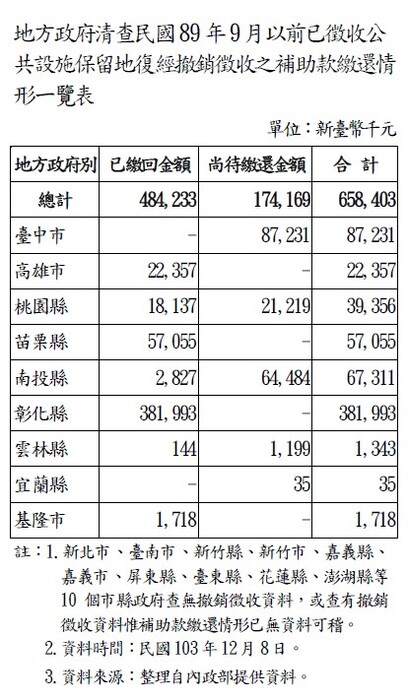
Accelerated Acquisition of Urban Planning Lands Reserved for Public Facilities” from 1989 to 1993, and budgeted NT$583.2 billion of the first phase of the special budget to subsidize local governments. Afterwards, some lands which had been expropriated by the local governments were cancelled or repurchased, and the local governments should refund subsidies proportionally to the Treasury. However, the NAO found out that the Ministry of Interior and the Ministry of Finance did not reach a consensus on the responsibilities of asking local governments to record and review the approval cases of cancellation of expropriation or repurchase agreements before 2000, causing the cases detail had not been checked. Since the notification of the NAO, the Executive Yuan suggested operations to the ministries and the local governments, and the Ministry of Finance called meetings to discuss the operations. Therefore, the local governments found out that the refunds which should be returned to the Treasury were NT$658.4 million, and NT$484.23 million had returned before December 8, 2014. The Ministry of Finance had regulated the accounts receivable in order to complete the mechanism of collection.
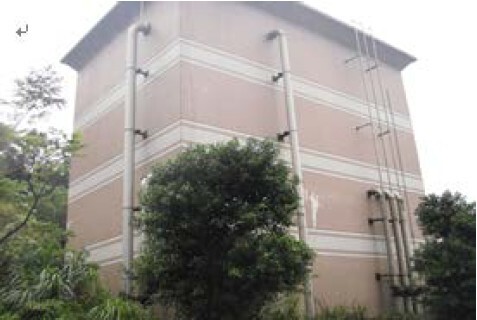
In order to implement the water-saving policy and solve the leakage problem of highland communities in Taipei City, Taipei Water Department had planned to conduct “The Taipei City Old Highland Community Pressurization and Driving Device Improvement Project”, and provided subsidies for 80% of construction fees for the applied communities. They had budgeted NT$516.8 million by six years since 2014, and expected to finish 6,709 improving construction of 34 old highland communities. However, Taipei City Audit Division had found out that some highland communities were low population deluxe villas, and the improving construction fees were relatively high because of the wide areas, resulting in 610 thousand of the high subsidies average family and violating the principle of fulfilling social justice by government expenditures. Since the notification of Taipei City Audit Division, the Department had revised the subsidy principles that the subsidy limit of NT$10 thousand for every family. Therefore, the 2014 improving construction expenditure saved NT$26.48 million and the overall project could save NT$186.64 million, promoting the fairness of resources using by local governments.
Accelerated Acquisition of Urban Planning Lands Reserved for Public Facilities” from 1989 to 1993, and budgeted NT$583.2 billion of the first phase of the special budget to subsidize local governments. Afterwards, some lands which had been expropriated by the local governments were cancelled or repurchased, and the local governments should refund subsidies proportionally to the Treasury. However, the NAO found out that the Ministry of Interior and the Ministry of Finance did not reach a consensus on the responsibilities of asking local governments to record and review the approval cases of cancellation of expropriation or repurchase agreements before 2000, causing the cases detail had not been checked. Since the notification of the NAO, the Executive Yuan suggested operations to the ministries and the local governments, and the Ministry of Finance called meetings to discuss the operations. Therefore, the local governments found out that the refunds which should be returned to the Treasury were NT$658.4 million, and NT$484.23 million had returned before December 8, 2014. The Ministry of Finance had regulated the accounts receivable in order to complete the mechanism of collection.
In order to implement the water-saving policy and solve the leakage problem of highland communities in Taipei City, Taipei Water Department had planned to conduct “The Taipei City Old Highland Community Pressurization and Driving Device Improvement Project”, and provided subsidies for 80% of construction fees for the applied communities. They had budgeted NT$516.8 million by six years since 2014, and expected to finish 6,709 improving construction of 34 old highland communities. However, Taipei City Audit Division had found out that some highland communities were low population deluxe villas, and the improving construction fees were relatively high because of the wide areas, resulting in 610 thousand of the high subsidies average family and violating the principle of fulfilling social justice by government expenditures. Since the notification of Taipei City Audit Division, the Department had revised the subsidy principles that the subsidy limit of NT$10 thousand for every family. Therefore, the 2014 improving construction expenditure saved NT$26.48 million and the overall project could save NT$186.64 million, promoting the fairness of resources using by local governments.